Now Enrolling for Fall 2026


Voice lessons
Talent isn't something you're born with—it's earned through hard work, exceptional instruction, consistent practice, and having a community that believes in you.
Whether you've never sung a note or you're already a strong vocalist, our job is the same: to help you become the very best singer you can be. We've transformed complete beginners with little pitch ability into award-winning performers and taken good singers to a professional level.
Through our structured curriculum, firm but loving teaching approach, and performance-based training, we guarantee incredible progress in a joyful environment where students are challenged, supported, and inspired to grow. Time and time again, we've watched even the shyest students find their voice and step confidently onto the stage.
Voice Curriculum overview
TECHNIQUE • HEALTH • PERFORMANCE • CONFIDENCE
Our strucured, engaging curriculum helps students grow technically, musically, and creatively.
Students work on 1–3 pieces at a time, alongside any current audition requirements, preparing for LJMA’s monthly performance opportunities and relevant outside performances or auditions.
Lessons are highly structured, beginning with 15 minutes of warm-ups, followed by focused song study and performance coaching.
Students learn to identify breathing points within each phrase, interpret the character, intention, and meaning behind the lyrics, and apply a range of vocal techniques to develop healthy vocal placement and control. They also learn to develop and transition smoothly between chest voice, head voice, and mixed voice, building greater range, flexibility, and consistency.
Teachers establish a structured practice routine tailored to each student to support consistent development and progress.
The goal is to build a strong, diverse repertoire while developing musicianship, vocal technique, stage confidence, and performance skills, enabling students to leave LJMA as well-rounded, independent musicians.
BREATH CONTROL
Students learn proper breathing technique, the foundation of high-quality performance and singing.
VOCAL REGISTERS
We introduce all voice students to the three vocal registers, or "voices": chest, mix, and head. They'll learn when and how to use all three throughout their time under our tutelage.
CORE ENGAGEMENT
Students learn how to properly engage their core muscles to support healthy, consistent vocal production. Strong breath support helps improve tone, control, endurance, and overall vocal stability.
VOCAL PLACEMENT
Students discover how to direct and resonate sound efficiently throughout the vocal tract. Proper vocal placement enhances tone quality, projection, and vocal comfort while reducing strain.
SCALES
Through regular scale exercises, students develop pitch accuracy, ear training, vocal flexibility, and range. Scales also help reinforce healthy technique and build vocal confidence.
AGILITY
Students work on vocal dexterity and coordination, learning to navigate runs, riffs, and rapid note changes with greater ease and precision. Agility training improves flexibility across all styles of singing.
VOCAL HEALTH
We teach students how to care for their instrument through proper vocal habits, hydration, rest, and technique. Understanding vocal health helps singers perform consistently and avoid unnecessary strain or injury.
WARM-UPS / COOL-DOWNS
Students learn effective warm-up and cool-down routines that prepare the voice for singing and aid recovery afterward. These practices promote vocal longevity and reduce the risk of fatigue.
FOOD TO EAT / NOT EAT BEFORE PERFORMANCES
Students learn how nutrition can impact vocal performance. We discuss foods and beverages that support vocal function, as well as common dietary choices that may contribute to irritation, reflux, or excess mucus.
VOCAL PEDAGOGY
Students gain an understanding of the science and methodology behind singing. By learning how the voice functions, they develop greater awareness, independence, and confidence in their vocal journey.
RELIEVING TENSION
We help students identify and release unnecessary tension in the jaw, neck, shoulders, tongue, and body. Reducing tension allows for freer vocal production and a more comfortable singing experience.
POSTURE
Students learn proper alignment and body awareness to create an optimal foundation for breathing and singing. Good posture promotes efficient vocal function, improved resonance, and greater physical ease while performing.
AUDITION PREPARATION
AMATEUR | COLLEGIATE | PROFESSIONAL |
|---|---|---|
School musicals and more | Vocal reels | |
Upstage | Preparing for pre-screening | TV |
Morgan Wixham | Voiceovers | |
Yada | Preparing and selecting repertoire | Broadway |
Adderly | Talent agent auditions | |
Kids On Stage | Recommendation letters | Film |
AUDITION SUCCESS STORIES
For our most recent audition success stories please check out our Student Achievement Page
Live performance opportunities
From community showcases to grand recitals on the big stage, students build confidence, stage experience, and unforgettable memories while learning from one another.

Our monthly Spotlight Sessions allow students to experience the joy of performing in a welcoming and supportive environment at local senior living communities. Designed for performers of all levels, these sessions help newer students build confidence, overcome stage fright, and take their first steps into live performance.
For more experienced performers, Spotlight Sessions provide a valuable opportunity to showcase new repertoire, refine performance skills, and prepare for upcoming recitals, competitions, and events. These intimate performances allow students to grow as musicians while sharing their talent with an appreciative audience and making a meaningful connection through music.
SPOTLIGHT SESSIONS
BLACK TIE RECITALS
Our Black Tie Recitals are a highlight of the LJMA year, allowing students to perform on a big stage in front of family, friends, and the LJMA community.
-
Red carpet entrance with professional photography
-
Award ceremony celebrating student achievements
-
Intermission featuring freshly prepared tacos, live music, and refreshments, where families can connect and celebrate together
Students are encouraged to collaborate in performances, support one another, and learn the important skill of introducing themselves, their performance pieces, and entertaining an audience. More than just a recital, these events help students build confidence, self-esteem, stage presence, and pride in their accomplishments.
With students and families traveling from Arizona, New York, and Northern California, these special events quickly become a favorite family memory and a meaningful celebration of each student’s musical journey.


OPPORTUNITIES FOR ADVANCED STUDENTS
ARTIST DEVELOPMENT PERFORMANCES
Once a student can confidently perform a 15-minute set while self-accompanying and has prepared at least one original song, they become eligible for artist development performance opportunities arranged by LJMA.
These opportunities include performances at the Santa Monica Farmers Market, local restaurants, city events, and private bookings. These real-world experiences help students develop their stage presence, professionalism, confidence, and ability to perform independently in a variety of settings.

BAND
LJMA bands bring together the most dedicated students at LJMA to work together and experience playing in a high-quality and dedicated band. They train solo throughout the spring semester in their private lessons, learning the material, and then come together for a week-long practice session before performing live at a music festival in June.

SQUAD HARMONIX
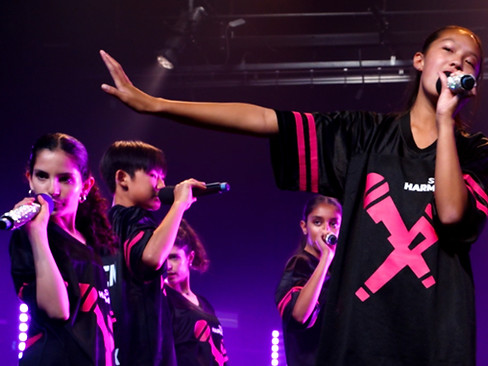
Squad Harmonix is LJMA’s one-of-a-kind, year-round a cappella training program for advanced singers ages 8–18. Students train at different levels, unlocking new opportunities as they progress, including public performances, music video productions for the official Squad Harmonix YouTube channel, and recording professional albums and EPs released across major streaming platforms.
Training is rigorous and team-focused, giving singers a supportive environment in which to develop their skills, build lasting connections, and work towards shared goals. The program prepares students for high-level performance opportunities, with members performing on world-renowned stages, earning awards, and gaining acceptance into advanced vocal programs.
TUITION AND TEACHER LEVELS
LESSON PRICING
Private lesson pricing is tiered according to each instructor's experience and qualifications, making it easy to find the right teacher at a tuition level that works for you and your family.
Level | Title | Credentials | 30 mins | 45 mins | 60 mins |
|---|---|---|---|---|---|
1 | LJMA Certified Apprentice | 0-2 Years Teaching Experience | $40 | $50 | N/A |
2 | LJMA Certified Instructor | 2-5 Years Teaching Experience | $50 | $60 | $70 |
3 | Professional Instructor | 5-10 Years Teaching Experience. Music Degree | $60 | $75 | $85 |
4 | Senior Professional Instructor | 10+ Years Teaching Experience, Music Degree | $70 | $85 | $100 |
5 | Master Instructor | 20+ years Teaching Experience, Music Degree, extensive experience preparing students for auditions and college prep | $120 | $135 | $150 |
Teacher Level 1 is only offered for piano lessons.
Lessons are offered weekly. Make-up policies and payment details provided upon enrollment.
FREQUENTLY ASKED QUESTIONS
1. Do you offer private voice lessons for beginners?
Yes. We offer private voice lessons for complete beginners through advanced singers. Our beginner program focuses on healthy vocal technique, breath control, pitch accuracy, posture, vocal placement, and developing confidence before progressing to more advanced repertoire and performance skills.
2. Where are your voice lessons located?
Our voice lessons are based in Santa Monica, California. We also offer online lessons for students who are unable to attend in person.
3. Do you offer online voice lessons?
Yes. We provide live online private voice lessons for students anywhere in the world. While online lessons are highly effective, we generally recommend in-person lessons whenever possible.
4. What ages do you teach?
We teach children (ages 8+), teens, and adults. Lessons are customized to each student's age, experience level, goals, musical interests, and learning style.
5. How often should students take voice lessons?
We recommend weekly lessons. Consistent instruction allows students to develop healthy vocal habits, build repertoire, prepare for performances, and make steady progress toward their musical goals.
6. What lesson length is recommended?
Every student is different, but our general recommendations are:
-
*45 minutes: Ages 8 –13
-
60 minutes: Ages 14 –18 and advanced students
*Please note: 30-minute lessons are not offered for voice lessons
We are happy to recommend the best lesson length based on a student's experience, goals, and commitment level.
7. What do students learn in voice lessons?
Our voice curriculum focuses on building healthy, versatile, and confident singers. Students learn:
-
Breath control and breath support
-
Vocal registers (chest, mix, and head voice)
-
Core engagement
-
Vocal placement and resonance
-
Pitch accuracy and ear training
-
Vocal agility and flexibility
-
Vocal health and maintenance
-
Warm-up and cool-down routines
-
Posture and body awareness
-
Tension release techniques
-
Vocal pedagogy and understanding how the voice works
-
Performance preparation and stage presence
Students typically work on 1–3 songs at a time while preparing for performances, auditions, and personal musical goals.
8. Are there performance opportunities for voice students?
Absolutely. LJMA is a performance-based academy that offers more than 35 live performance opportunities each year.
Most students perform monthly at local assisted living communities and twice annually at our formal Black Tie Recitals. Students are encouraged to perform regularly as part of their musical development.
We believe live performance develops confidence, accountability, stage presence, and purpose. As students progress, even more performance opportunities become available.
9. Can I still participate in LJMA performances if I take online lessons and do not live locally?
Absolutely. We currently have students traveling from Northern California, Arizona, New York, and throughout Southern California to participate in our Black Tie Recitals and special performance events.
10. Do students need prior singing experience?
No. Many of our students begin with little or no previous vocal training. Our instructors create individualized lesson plans that help each student progress at a comfortable and appropriate pace.
11. What styles of singing do you teach?
We teach a wide variety of styles, including:
-
Pop
-
Musical Theatre
-
Rock
-
Jazz
-
Singer-Songwriter
-
R&B
Our instructors help students develop strong techniques that can be applied across multiple musical genres.
12. What makes your voice program different from other music schools?
-
Performance-based learning with 35+ live performances annually
-
Guaranteed results
-
A supportive, family-oriented environment where teachers invest deeply in each student's success
-
Strong emphasis on accountability, discipline, and independent learning
-
Structured curriculum with standardized teaching methods across all instructors
-
Exceptional teacher retention, which allows students to build long-term mentoring relationships
-
Regular opportunities to perform in front of live audiences
-
Advanced training pathways for dedicated students
-
Proven success in preparing students for auditions, performances, and collegiate programs
13. Do you prepare students for auditions?
Yes. Our instructors regularly prepare students for:
-
School and community theatre auditions
-
Honor choirs and vocal ensembles
-
College auditions and pre-screenings
-
Talent agent auditions
-
Professional theatre auditions
-
Television and film auditions
-
Voiceover auditions
We assist students with repertoire selection, audition preparation, performance coaching, vocal reels, and recommendation letters when appropriate.
14. What is vocal placement, and why is it important?
Vocal placement refers to how singers direct and resonate sound throughout the vocal tract. Proper placement improves tone quality, projection, vocal comfort, and consistency while cutting out unnecessary strain.
15. How do students learn to sing higher notes?
Students learn to access and strengthen their chest voice, mix voice, and head voice through structured exercises and repertoire. By developing proper breath support, vocal placement, and coordination between registers, singers can safely expand their vocal range over time.
16. How long does it take to improve as a singer?
Every student progresses at a different pace. With consistent practice and weekly lessons, most beginners notice improvements in pitch accuracy, tone, and confidence within just a month. Thanks to our performance-based curriculum, many students are able to perform at an LJMA Black Tie Recital during their first semester.
17. Do you teach students about vocal health?
Yes. Vocal health is an important part of our curriculum. Students learn how hydration, sleep, nutrition, warm-ups, cool-downs, and proper technique affect vocal performance and long-term vocal development.
18. Do you offer private voice lessons for adults?
Yes. We welcome adult students of all experience levels, whether they are complete beginners, returning singers, professional performers, or individuals looking to improve their confidence and vocal skills. While our student performances are currently focused on ages 8–18, adults receive the same high-quality instruction and personalized training.
19. Are there advanced opportunities for dedicated voice students?
Absolutely. Students who demonstrate exceptional commitment and progress may be invited to participate in advanced training opportunities such as:
-
LJMA Bands
-
Artist Development Program
-
YoungArts preparation
-
Varsity Vocals
-
SCVA
-
CMEA
-
A Cappella Academy
-
Solo performance bookings and community events
These programs provide additional performance experience, artistic development, competition preparation, and real-world industry exposure.
